

Key Takeaways
- Bolsonaro defeated Lula in Brazil’s first round, forcing a tight October 25 runoff.
- Prediction markets correctly foresaw this upset, outperforming flawed national polls.
- This success cements prediction platforms as superior data engines for future elections.
Polymarket Beats Polls In the Brazilian Election
Prediction markets have become a reliable source of political data, and the first round of the Brazilian presidential election seems to confirm and cement this role.
Polls from respected national sources like Datafolha expected President Luiz Inácio Lula da Silva to lead the first round with 42% of the vote, and Senator Flávio Bolsonaro to trail in second place with 38%, with the rest spread across other candidates.
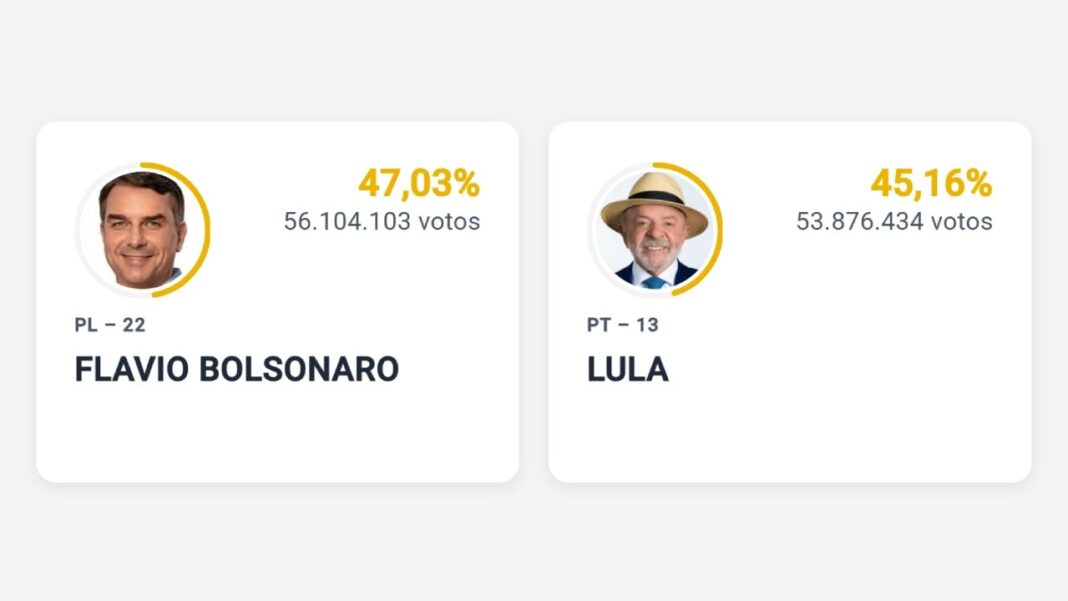
Nonetheless, the election followed a different course. Bolsonaro defeated Lula, reaching 47.03% of the popular vote with over 56 million votes, while the Brazilian president only reached 45.16%, registering 53.8 million votes, forcing a runoff election on October 25.
After the results were known, Lula stated that he was surprised by the outcome. “I was certain I would win the election in the first round. Starting tomorrow, a new campaign begins. Bolsonaro represents uncertainty for the country,” he assessed.
Nonetheless, prediction market platforms, banned by the Central Bank of Brazil, had anticipated this outcome for days, with Bolsonaro enjoying a substantial lead over Lula. Chance lines crossed first on September 12, and Bolsonaro’s lead grew to 86% after the first round results were known.
This behaviour mimics the lead-up to the 2024 U.S. presidential election, when polls and prediction markets anticipated different outcomes. While conventional polls anticipated a close call, with some favoring Democratic candidate Kamala Harris over Donald Trump, Kalshi and Polymarket both favored Trump by 10% over Harris.
Trump became president after sweeping all the so-called “battleground states” and reaching almost half the popular vote, becoming the 47th president of the U.S. and defying polls simultaneously.
At the time, both platforms celebrated the outcome, and analysts argued they had become better, more reliable data engines than traditional polls, which can be biased in favor of whichever party orders and pays for them.
The next test for these platforms will come in the 2026 U.S. midterm elections, but this time, both polls and prediction markets agree that Democrats will sweep both the House and the Senate.