
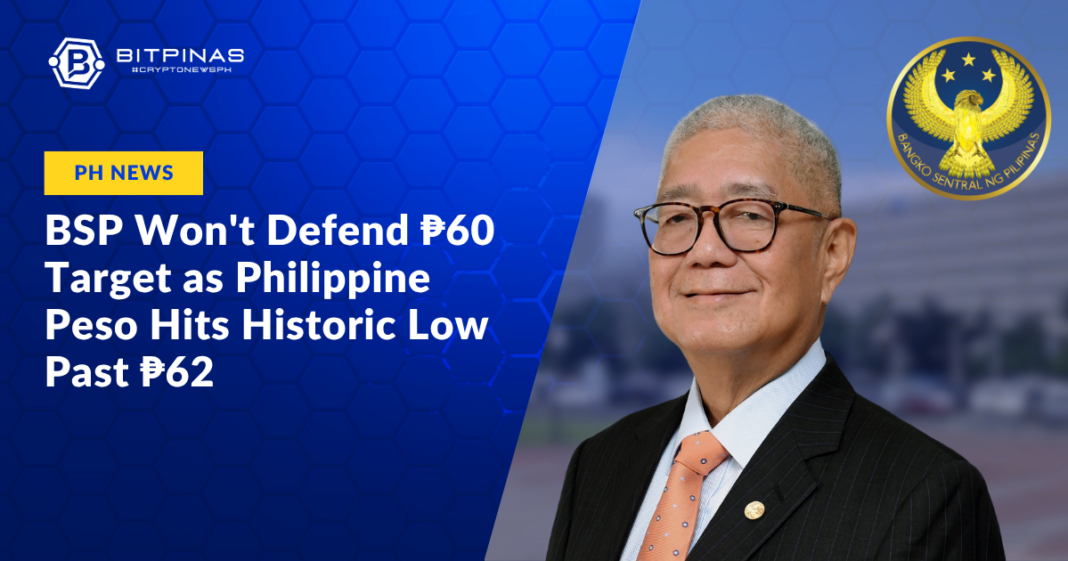

The Bangko Sentral ng Pilipinas (BSP) will not draw down its foreign currency reserves to artificially defend a ₱60 exchange rate against the US dollar. The policy stance comes as the Philippine peso breached the ₱62 threshold for the first time in history, ending trading at ₱62.265 on August 28, 2026.
Managing Volatility Over Rate Pegs
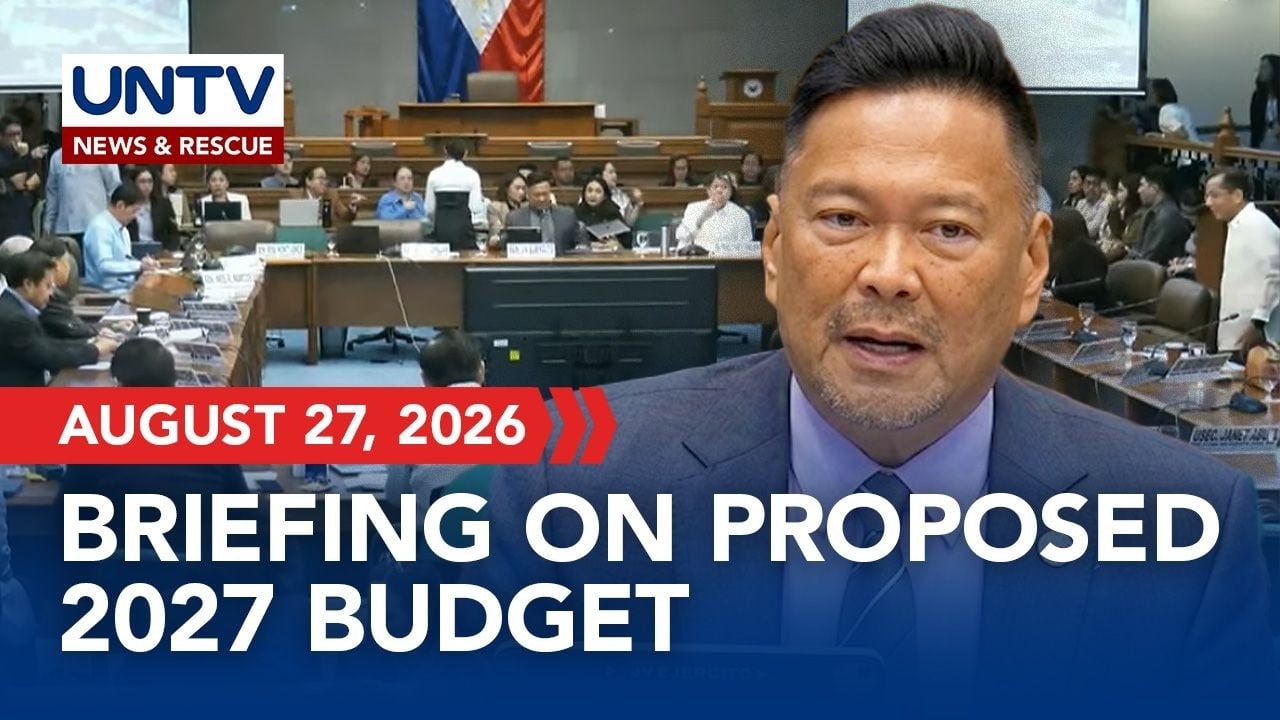
Addressing lawmakers during a Senate finance committee hearing, BSP Governor Eli Remolona Jr. clarified that while the central bank can intervene to cushion sharp currency drops, attempting to defend a fixed exchange rate target is unsustainable. Attempting to hold the peso at or below ₱60 would rapidly exhaust the nation’s foreign exchange reserves without addressing the fundamental drivers of currency pressure.
Rapid depreciation accelerates imported inflation by driving up domestic prices for fuel, food, fertilizers, and industrial inputs. To prevent macroeconomic instability, the BSP’s current exchange strategy prioritizes smoothing out extreme market fluctuations rather than committing reserve capital to defend a specific threshold.
Current Account Deficit and the Savings Gap
The peso’s decline stems from a persistent current account deficit where foreign currency outflows consistently outpace incoming dollars. Although foreign currency flows from Overseas Filipino Worker (OFW) remittances and the Business Process Outsourcing (BPO) sector remain substantial, they are insufficient to offset the nation’s import reliance.
Remolona noted that the country’s trade deficit stands at approximately 13% of gross domestic product (GDP). He pointed to domestic economic dynamics, arguing that national investment and consumption continue to exceed domestic savings, forcing the economy to rely on foreign financing to cover the difference.
That framing drew immediate pushback from lawmakers:
- Representative Sarah Elago argued that low household savings stem from low wages, regressive tax structures, and elevated living costs rather than consumer overspending, maintaining that policy adjustments should focus on strengthening wage support rather than criticizing working families.
Monetary Response and Economic Outlook
To contain inflationary pressures, with headline inflation standing at 6.2% in July against the central bank’s target band of 2% to 4%, the BSP Monetary Board raised its benchmark interest rate by 25 basis points to 5%. The decision marks the third consecutive rate hike, bringing cumulative monetary tightening to 75 basis points since April.
Central bank officials emphasized that interest rate adjustments and volatility interventions offer short-term stabilization, but long-term currency strength depends on structural trade reforms. Rebalancing the currency will require expanding national export capacity through developments like the Luzon Economic Corridor alongside policy measures that encourage long-term domestic savings.
This article is published on BitPinas: BSP Won’t Defend ₱60 Target as Philippine Peso Hits Historic Low Past ₱62
What else is happening in Crypto Philippines and beyond: