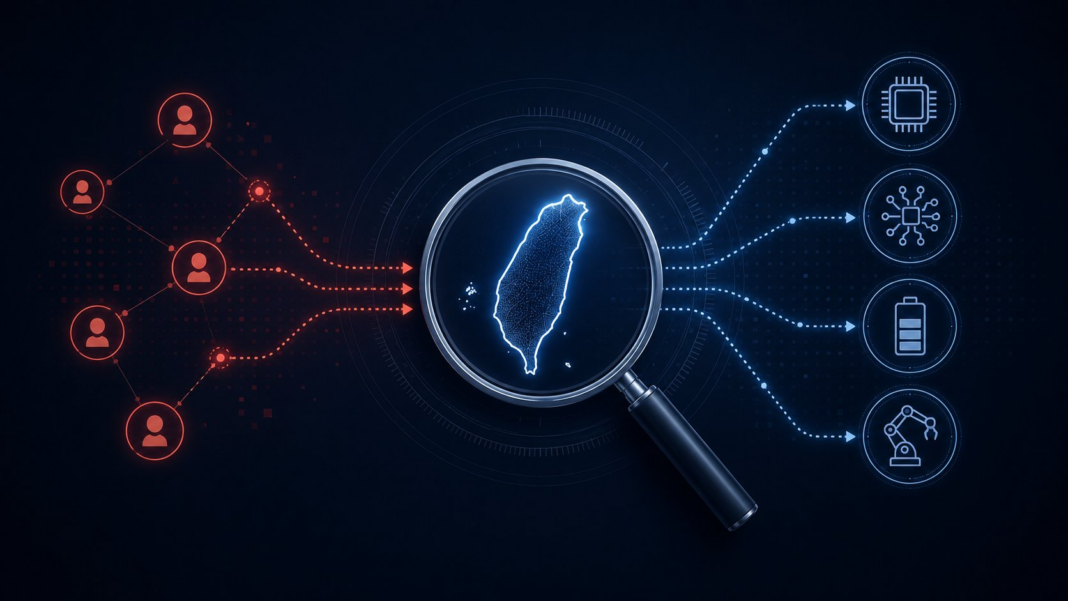

Taiwan is investigating 17 Chinese-funded companies suspected of illegally recruiting engineers in semiconductors, AI, batteries, and defense. Authorities searched 64 locations and questioned 114 people between July 13 and August 4, according to reporting published Friday.
Investigators are focusing on hidden Chinese ownership, unauthorized offices, and local fronts allegedly used to hire engineers. Taiwan is treating access to experienced high-tech workers as part of protecting its technology sector, alongside controls on chips and technical know-how.
How the alleged recruiting networks operated
The current 17-company investigation centers on companies suspected of recruiting Taiwanese engineers without authorization while using fake engineering offices to gain access to their expertise. Goke Microelectronics is among the companies under scrutiny and reportedly offered packages including triple salaries to lure entire production teams.
The methods fit a pattern Taiwan’s Ministry of Justice Investigation Bureau documented in March. The MJIB said Chinese firms had used Taiwanese or foreign-invested fronts and unauthorized offices to conceal their backing while recruiting semiconductor, IC design, and other high-tech workers. That operation targeted 11 companies, searched 49 locations, and questioned 90 people.
The bureau says the special task force it created at the end of 2020 has investigated more than 100 cases. Goke’s name has also appeared before. In 2024, four people were convicted for setting up unauthorized Taiwan subsidiaries of Goke and Ruikuan Intelligent Company to recruit high-tech talent for Chinese companies.
The current operation remains an investigation. The reporting available so far describes searches and questioning, and does not establish that the 17 companies stole trade secrets.
Taiwan is treating chip talent as a security asset
Taiwan’s concern centers on the expertise carried by engineers as much as the hardware they build. Competition for those workers extends beyond Taiwan: Chinese technology companies have offered large pay packages to recruit AI talent in Singapore, while Anthropic is hiring engineers for its own custom AI chip effort.
Taiwan is separately pursuing cases involving the alleged theft of protected technology. In July, prosecutors indicted a former TSMC deputy manager who allegedly planned to recruit semiconductor workers for a China-based business and copied 21 items containing TSMC trade secrets. That case falls under a different legal framework from the recruitment investigation announced this week.
The raids do not create a new requirement for ordinary employers or make aggressive recruiting illegal by itself. Investigators are focusing on alleged concealed Chinese ownership, unauthorized business operations, and intermediaries used to obscure who was actually recruiting workers.
Companies using staffing agencies, engineering contractors, or other recruiting partners in Taiwan therefore have a practical reason to verify who owns those vendors and whether they are authorized to operate. Taiwan’s repeated sweeps are extending technology protection beyond chips and files to the networks used to recruit the engineers who develop them.
Also read: China is considering tighter export controls on AI models, training data, and chip technology as governments across APAC put more restrictions around strategic technology.