

Key Takeaways
- Bitcoin blocks cap at 4 million weight units, forcing lower-fee payments to wait.
- Bitcoin Core 31.0 can evict weak packages when a node’s 300 MB mempool fills.
- Bitcoin users have 3 fee-bump paths, RBF, CPFP, and mining accelerators when congestion persists.
The Line Forms Before the Block
Think of a crowded subway platform at rush hour. Every new rider has a valid ticket, but the arriving train has limited room. On Bitcoin, a transaction first enters a node’s mempool, a temporary holding area for valid payments that have not yet been confirmed. The important wrinkle is that there is no single, universal mempool. Each node keeps its own version, applies its own local policies, and may see a slightly different collection of pending transactions.
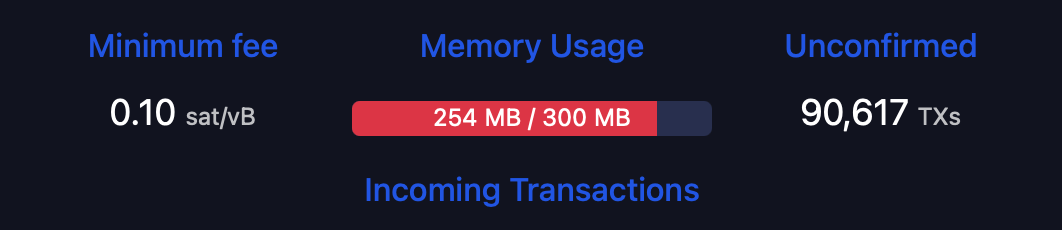
A full block and a full mempool are also different events. Bitcoin blocks are limited by consensus to 4 million weight units, a measurement that accounts for how transaction data is structured. Bitcoin Core nodes, by default, allow roughly 300 MB of memory for their local mempools and may retain transactions for as long as 336 hours. A block can fill while plenty of transactions remain in memory, waiting for a later train.
A Full Block Turns Waiting Into an Auction
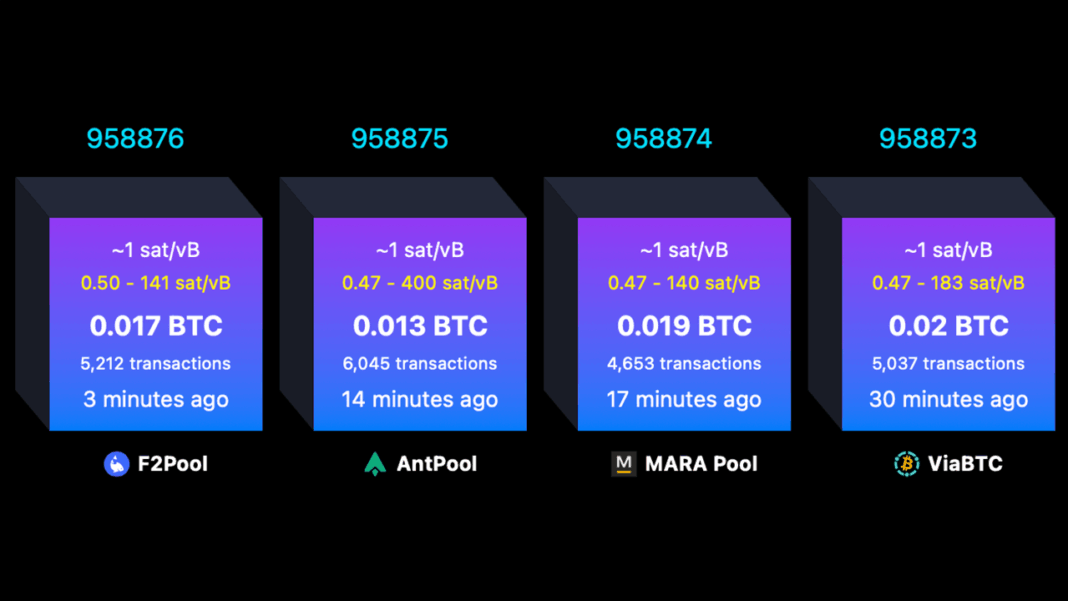
Miners do not normally choose transactions by age. They build block templates around fees, transaction weight, and dependencies between payments. The practical unit users see is satoshis per virtual byte, or sat/vB. A higher rate offers miners more revenue for the same scarce block space, so the strongest fee packages tend to move first.
That means a payment sent first can be confirmed after one sent minutes later. A high-fee transaction may spread broadly across the network and land in miners’ next templates. A low-fee transaction can remain below the cutoff, even after several blocks pass. Confirmation estimates help, but they are not promises because new transactions arrive continuously and blocks themselves appear at irregular intervals.
When enough pending transactions compete for every block, the mempool becomes less like a polite line and more like an airport upgrade list. New, better-paying passengers can displace weaker bids. If a Bitcoin Core node reaches its configured memory limit, it trims the economically weakest connected group of transactions and raises a rolling local fee floor. The evicted transaction is not invalid, and the blockchain has not canceled it. That node has simply stopped carrying it.
Congestion Reaches the Wallet
For an ordinary user, the first consequence is delay. A wallet may say a payment is pending for hours while newer transactions confirm. For a trader, exchange or treasury desk, that delay can postpone an exchange deposit, slow collateral movement, interrupt an arbitrage transfer or leave funds unavailable during a fast market.
Because fees are tied primarily to transaction weight rather than the value transferred, a $50 payment and a $5 million transfer can compete on similar terms when their transaction structures are comparable. The more time-sensitive the transfer, the more expensive underpaying can become.
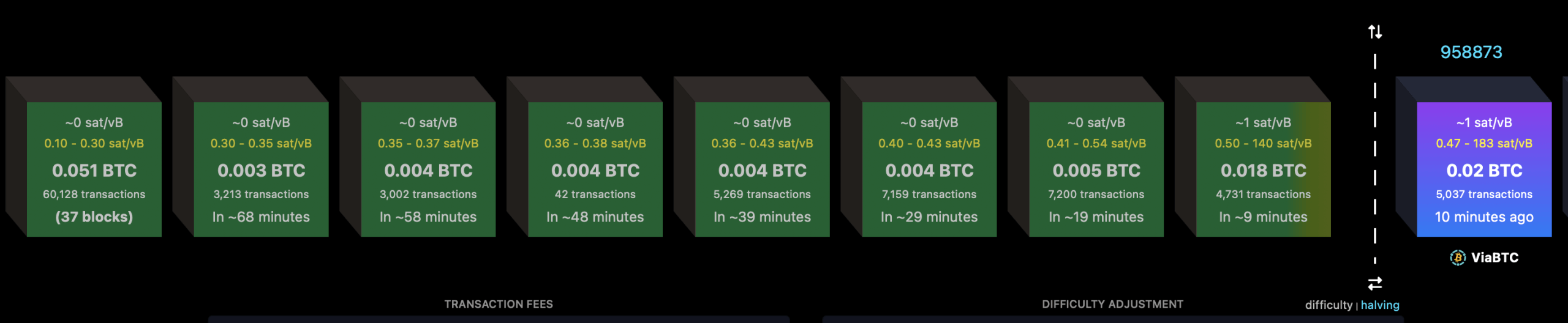
The second consequence is a higher fee market. Bitcoin has no protocol-level base fee like Ethereum’s. Instead, users compete against the marginal fee rate miners can fit into the next block, while each node also maintains a local admission floor. Under pressure, that dynamic floor can rise far above the software’s basic relay setting. The fee shown yesterday, or even 20 minutes ago, may no longer buy the same confirmation speed.
The third consequence is uncertainty before settlement. Seeing a transaction in a block explorer is evidence that some nodes know about it, not proof that every miner does. An unconfirmed payment can be replaced, evicted or disappear from a node’s view while remaining a valid possible spend. Businesses that release goods, credit accounts or treat a deposit as final at zero confirmations are accepting a risk that congestion can make more visible.
A Few Ways to Rescue a Stuck Payment
Bitcoin itself gives users two main ways to reprice a delayed payment. Replace-by-fee, known as RBF, lets the spender replace an unconfirmed transaction with one paying more. Think of it as canceling a low bid and submitting a stronger one for the same seat. Child-pays-for-parent, or CPFP, takes another route: A spendable output from the delayed transaction is used in a new, high-fee child transaction, giving miners an incentive to include the parent and child together.
Neither tool is magic. An RBF replacement must satisfy node policy and pay enough to beat both the transaction it replaces and the current market. A CPFP child must lift the combined fee rate of the entire package, not merely look expensive on its own. In a sharply rising market, a modest bump can still leave the payment below the moving cutoff. The real target is not the minimum relay fee. It is the fee rate near the tail of the next likely block.
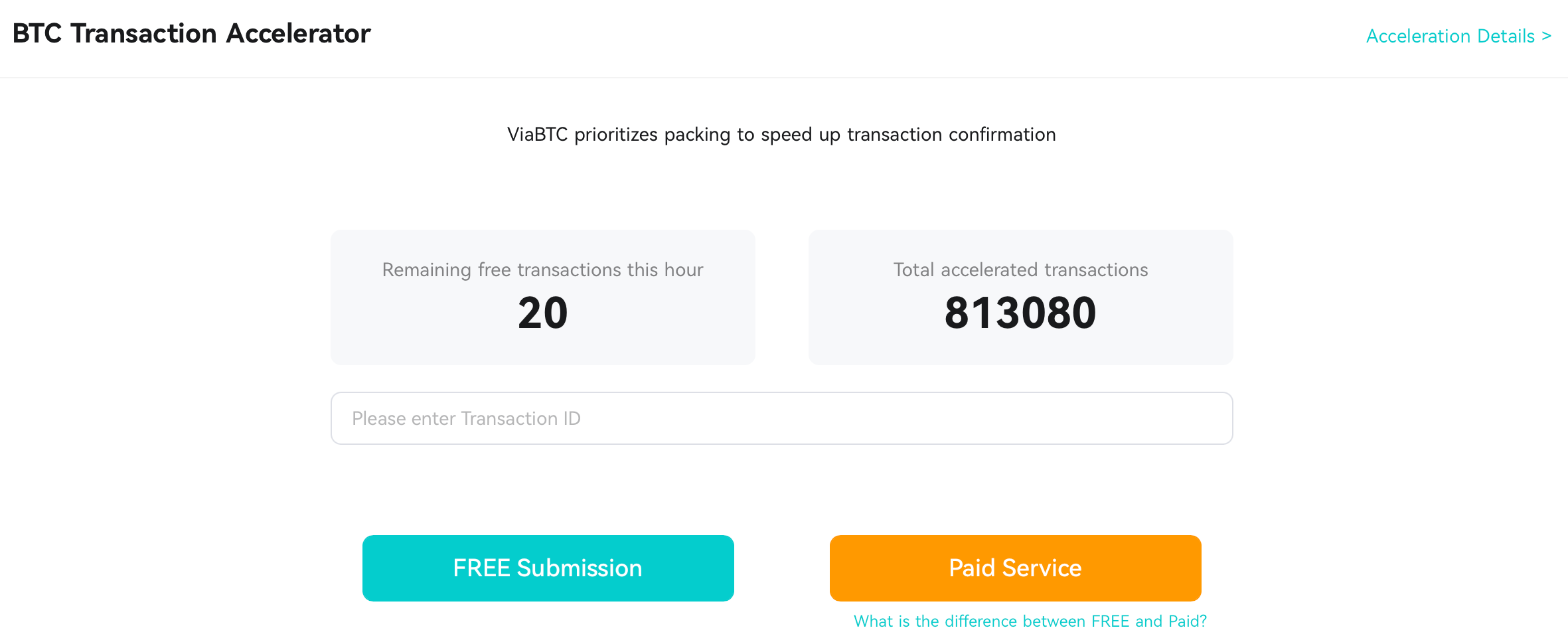
Outside these two options, mining accelerators are services offered by some bitcoin mining pools that let users submit a transaction for priority consideration when it is stuck in the mempool with a low fee. Rather than changing Bitcoin’s consensus rules, the accelerator simply asks participating miners to include that transaction in one of the next blocks they mine. Some accelerators are free but have eligibility requirements, while others charge a fee or require the transaction to meet a minimum fee rate.
Core 31.0 Changes the Machinery, Not the Ceiling
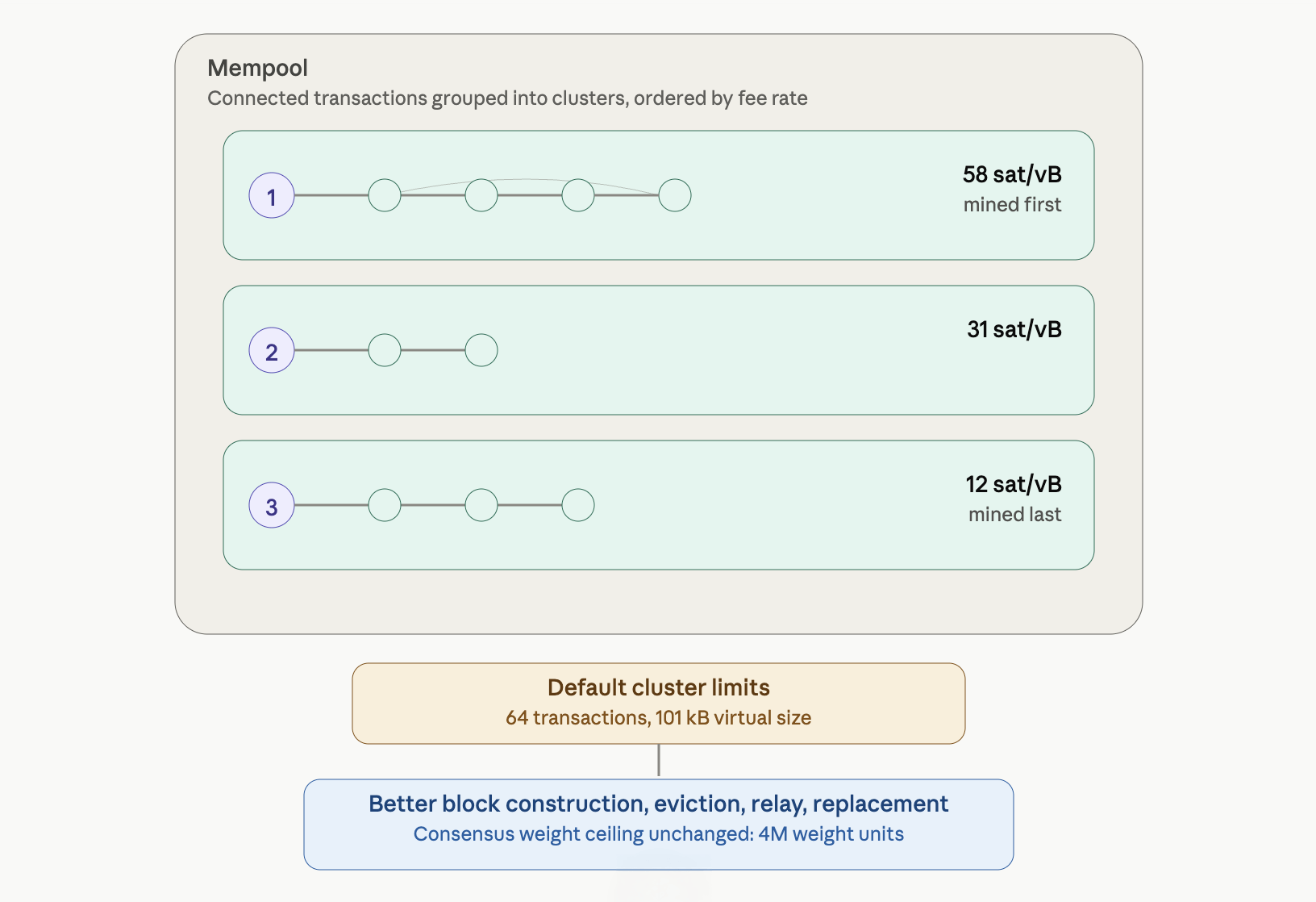
Bitcoin Core 31.0 changes some of the machinery behind that contest. Its cluster mempool groups connected unconfirmed transactions and orders them by the fee rate at which the group is expected to be mined. The default cluster limits are 64 transactions and 101 kB in virtual size. The design is intended to improve block construction, eviction, transaction relay and replacement decisions without changing Bitcoin’s 4 million-weight-unit consensus ceiling.
Other engineering work tries to reduce the cost of moving full blocks through the network. A compact block relay allows a node to reconstruct much of a new block from transactions it already holds, reducing the data and time needed to propagate it. That matters because slower propagation can increase the risk that two miners briefly build on different chain tips. More block capacity may lower short-term fee pressure, but it can also add bandwidth, validation, and propagation demands.
The practical lesson is simple. When a Bitcoin block is full, nothing breaks and no transaction earns seniority for waiting. Miners confirm the most economically attractive valid packages that fit, while cheaper payments remain pending, get repriced or lose relay reach. For investors and businesses, the fee is not a postage stamp. It is a bid for scarce settlement space. Treat confirmation time as a probability, and watch current fee conditions before a routine delay becomes an expensive operational problem.
Hero/Feature image source: mempool.space