

Key Takeaways:
- Bitgo introduced five security layers for institutional digital asset transactions.
- Controls address deepfakes, API spoofing, address manipulation, and withdrawal risks.
- Institutions can add approvals, address restrictions, and velocity limits.
Bitgo Adds 5-Layer Security Model to Stop Crypto Transaction Manipulation
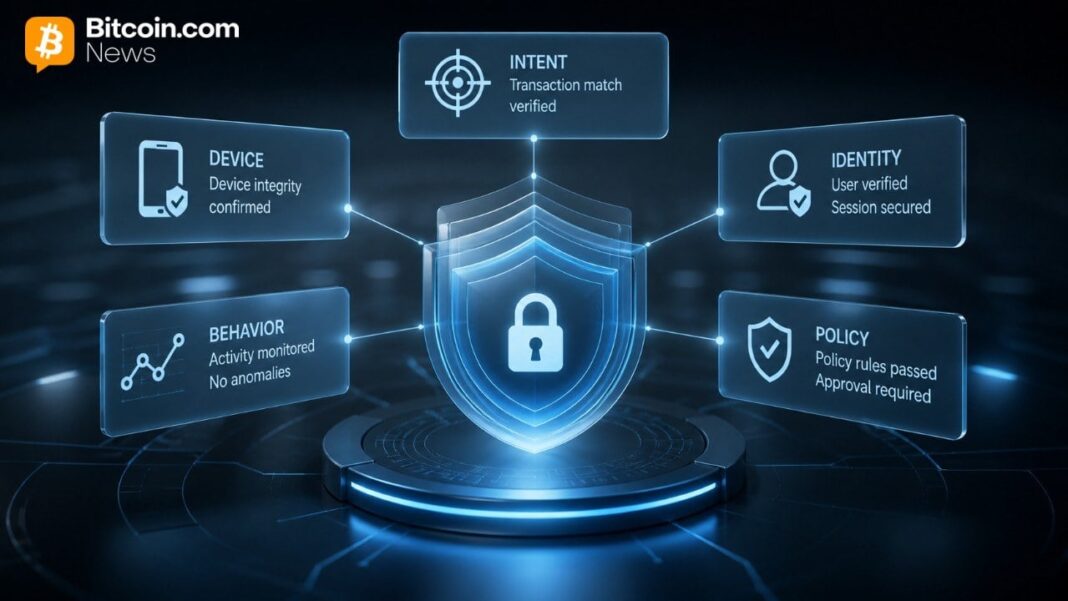
Digital asset security is moving beyond private keys. Bitgo Holdings Inc. (NYSE: BTGO) announced April 30 a five-layer transaction security model for institutions, adding checks across intent, device, identity, behavior, and policy. The release targets manipulation risks that can surface before transactions are finalized, not just when they are signed.
The announcement states:
“As attack vectors become more sophisticated, from deepfakes and social engineering to API spoofing and address manipulation, Bitgo’s latest release reflects a structural shift in how digital asset transactions are secured.”
The update places transaction context at the center of institutional security. The intent layer uses real-time API attestations to match transaction details with user approval before signing. Device review runs through the Verify app, which uses biometrics, device attestation, and app integrity checks. Identity controls add hardware-bound authentication, session binding, and video identification when needed. Together, these checks broaden approval review beyond the signing key to the request, device, user, and operating environment.
Policy Engine Adds Institutional Crypto Controls
“Bitgo secures transactions across five critical layers that include intent, device, identity, behavior, and policy,” the company explained. The behavior layer adds real-time withdrawal monitoring and can flag activity tied to address poisoning. That gives institutions a chance to detect suspicious movement before assets leave custody.
The policy layer adds firm-level controls through the Policy Engine. Institutions can require added approval for large transfers, restrict withdrawals to approved addresses, and set velocity limits. These rules operate separately from cryptographic authorization. As a result, a transaction can be valid at the signing level but still blocked if it violates internal controls.
The company emphasized:
“By validating transactions across intent, device, identity, behavior, and policy layers, Bitgo addresses a new class of risks facing institutions, where attacks increasingly target the gaps between systems in addition to the systems themselves.”
The release builds on existing security infrastructure for custody and digital asset operations. Services include custody, wallets, staking, trading, financing, stablecoins, and settlement from regulated cold storage. For institutional crypto teams, the shift is clear: securing keys remains essential, but transaction safety now also depends on verified context, real-time behavioral signals, and enforceable policy controls across systems.