
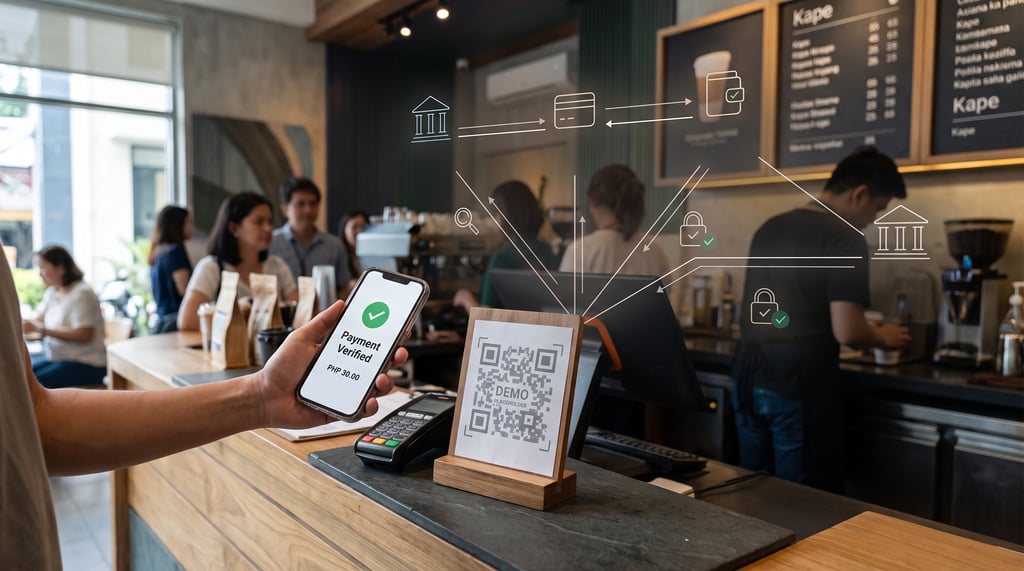

New payment companies could face a one-year wait to enter the Philippines’ regulated payment-system market. The proposed pause would give the country’s central bank time to reassess how payment operators are classified and regulated.
The Bangko Sentral ng Pilipinas is proposing a 12-month suspension of new operator of payment systems (OPS) registrations. The draft pairs that pause with a National QR Code Merchant Database and tighter controls requiring financial institutions and payment providers to identify merchants and trace payment flows.
The rules would land in a fast-growing digital-payments market. According to the BSP’s 2025 e-payments report, digital payments accounted for 64.69% of Philippine retail transaction volume in 2025, up from 57.45% in 2024, while merchant payments made up 74.31% of electronic transactions.
That growth includes new consumer payment options such as Apple Pay’s Philippine rollout, alongside QR Ph and domestic instant-payment rails. The scale of merchant payments makes identity, settlement, and transaction-tracing requirements especially consequential for banks, e-wallets, fintechs, and payment processors operating in the country.
How the proposed 12-month pause would work
Under the draft, the BSP would stop accepting and processing new OPS registration applications for 12 months from the circular’s effectivity. Applications submitted before the suspension could still be evaluated, but the BSP would issue no final approval or denial until the pause ends.
Companies also could not begin activities requiring OPS registration during the suspension unless otherwise authorized. The BSP’s payment-system framework separately covers OPS registration and merchant acquisition licensing, so the proposal would not freeze every form of payment licensing.
The BSP exposure draft would also establish a National QR Code Merchant Database containing merchant identity, registration, settlement, ownership, and risk information. An interim repository would be required within 90 days of effectivity, followed by the full database within 12 months and migration and validation of active records within 15 months.
The database would emerge as Southeast Asian economies deepen links between national payment systems. Singapore and Thailand, for example, are expanding cross-border digital payment cooperation as regional regulators pursue greater interoperability.
Tighter merchant traceability raises the compliance bar
The broader rules would require BSP-supervised institutions to identify the merchants, intermediaries, accounts, transactions, and settlement flows involved in merchant payments. A transaction could not continue if the merchant could not be identified or the payment could not be attributed and reconciled to that merchant.
Layered payment arrangements would also face tighter controls. Intermediaries could remain involved when institutions can identify the parties and trace funds, but they could not subcontract merchant acquisition to create another intermediary tier.
Higher-risk merchants, including casinos, virtual asset service providers, and money service businesses, would generally face enhanced due diligence and tighter transaction or settlement controls. Existing layered relationships would receive six months after effectivity for review and another six months after each review to correct deficiencies.
Institutions would also have to notify the BSP within 24 hours of detecting material fraud or scams, sanctions breaches, cybersecurity or unauthorized data-access incidents, unlicensed activity, or illegal merchant activity. A complete report would generally follow within five business days, increasing the importance of payment logging, fraud detection, reconciliation, and incident-escalation systems.
Payment infrastructure is also becoming more automated across APAC, including AI-enabled payment tools that can initiate transactions on users’ behalf. Stronger merchant identification and transaction traceability would add another control layer as those payment systems become more complex.
The suspension is not yet in effect, so none of its implementation deadlines have started. If finalized substantially as drafted, the rules would tighten entry into the Philippine payments market while making merchant identity and end-to-end transaction traceability more central to payment-system compliance.
Read more: Walmart finally adds Apple Pay and Google Pay as as contactless payments expand.
Let us teach you How to Talk to AI for free! Try our six-minute course at The Neuron Academy and learn a few simple ways to write better prompts and get more useful results from AI, or browse our other AI course for free for seven days. Check out all the lessons here →